Axon Motor
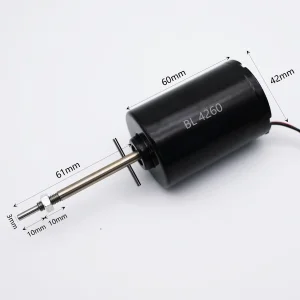
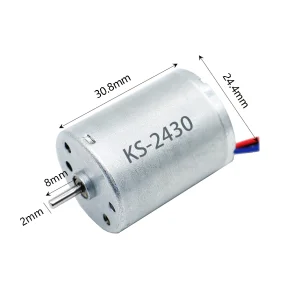
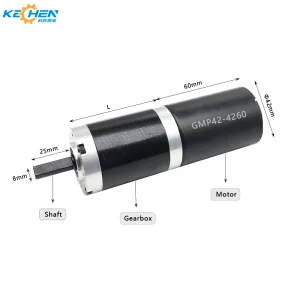
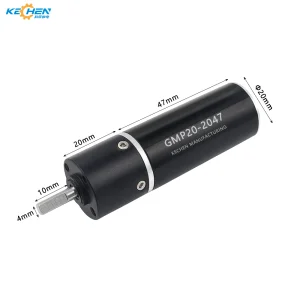
Romania's Industrial Transition & The Brushless DC Technology Market
An Executive Sourcing Guide to Integrating Next-Generation Micro-Drive Solutions in Central and Eastern Europe's Growing Automation Sector
1. Romania's Commercial & Industrial Landscape: Driving Efficiency
Romania has emerged as one of Central and Eastern Europe’s most dynamic hubs for automotive assembly, industrial automation, and smart electronics development. Key industrial regions, including the Western cluster centered around Timișoara and Arad, the Transylvanian technology hub of Cluj-Napoca, and the historical automotive heartlands of Pitești and Craiova, are experiencing rapid transformations. Prompted by the EU's aggressive net-zero frameworks and the Ecodesign Directive, tier-1 suppliers and equipment manufacturers are aggressively transitioning from traditional brushed motors to brushless topologies.
This shift is not merely technological; it is economic. Brushless DC (BLDC) motors offer significant lifecycle cost advantages over brushed motors by eliminating mechanical wear components. This yields maintenance-free lifetimes exceeding 20,000 hours—a crucial metric for automated production lines and deep-embedded automotive actuators. Furthermore, with the national grid aligning towards decarbonization under the *National Recovery and Resilience Plan (PNRR)*, industrial developers prioritize energy density and conversion efficiency exceeding 85%.
2. Global Commercial Trends: The Rise of Smart Micro-Drive Systems
On a global scale, the micro motor market is shifting toward integration. Historically, engineers sourced motors, gearboxes, and drivers from separate vendors, leading to integration issues and compatibility challenges. Today, industry leaders rely on smart, integrated brushless solutions where drivers and control loops are built directly into the rear bell of the motor. This reduces footprint, simplifies wiring, and provides built-in protections against over-current, over-voltage, and thermal runaway.
Additionally, rare-earth magnet material science has advanced. The use of high-grade Neodymium Iron Boron (NdFeB) magnets ensures that even motors under 40mm in diameter can deliver high holding torque and quick acceleration profiles, matching the performance of much larger traditional induction systems.