Top Vibration Motor Manufacturers for Global Buyers

Time:2026-09-27 Author:Sienna
0%

Choosing the right Vibration Motor manufacturer can shape product reliability, noise levels, and long-term operating costs. Global buyers need more than attractive catalog prices. They must examine engineering capability, production consistency, testing methods, and after-sales support.

A useful principle comes from vibration engineering authority David J. Ewins: “The ultimate aim of modal testing is to obtain a mathematical model of the structure.” This mindset also matters when evaluating motor suppliers. A dependable manufacturer should show measurable data, not vague performance claims. Buyers should review vibration amplitude, rated voltage, operating temperature, service life, noise readings, and balancing tolerance. Factory audits, sample testing, and traceable quality records can reveal differences hidden behind similar specifications.

Small details matter. A motor may appear quiet on a workbench but become harsh inside a handheld device. A compact eccentric weight can influence battery life, housing stress, and user comfort. Certification documents, production capacity, customization experience, and communication quality also deserve careful attention. These factors become critical when importing across regions with different technical requirements.

Still, no supplier is perfect. Published figures may change between samples and mass production. Testing conditions can also be unclear. That weakness deserves attention.

This guide compares leading Vibration Motor manufacturers for global buyers. It considers product range, technical expertise, manufacturing scale, quality assurance, customization, and commercial reliability. The aim is practical judgment, not a simple ranking. A lower price may look efficient today, yet an unstable supply chain can become expensive tomorrow.
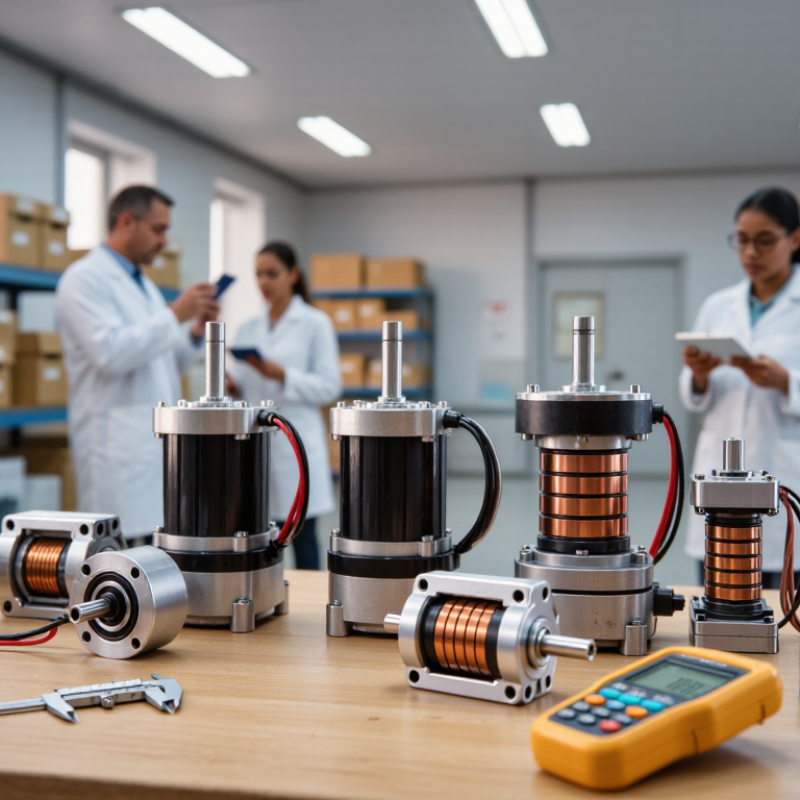
Top Vibration Motor Manufacturers for Global Buyers

Vibration Motors: Definition, Types, and Operating Principles

A vibration motor converts electrical input into controlled mechanical motion. Common types include eccentric rotating mass (ERM), linear resonant actuator (LRA), and piezoelectric motors. Small, but not interchangeable.

In an ERM motor, an offset weight spins on a shaft, creating centrifugal force and a noticeable buzzing sensation. An LRA moves a magnet and mass back and forth along one axis, usually near its resonant frequency. Piezoelectric elements deform when voltage is applied, producing fast, small movements. The feel differs: an ERM can be felt across a casing, while an LRA often gives a sharper, localized pulse.

The International Energy Agency’s 2011 report, Energy-Efficiency Policy Opportunities for Electric Motor-Driven Systems, estimated these systems used about 46% of global electricity. That figure covers motor-driven systems broadly, not vibration motors alone; it still highlights why power draw and operating time matter. For selection, compare rated voltage, frequency, acceleration, dimensions, and mounting conditions. A phone-sized motor installed on a soft plastic panel may feel weaker than the same unit fixed to metal. Mounting changes the result. Specifications are useful, but real assemblies can behave differently, and that detail is easy to overlook.

Key Industries and Applications for Vibration Motors

Vibration motors support material movement, product testing, and alert functions across many industries. In manufacturing, they help clear powder from hoppers and keep parts moving along vibratory feeders. A brief pulse can loosen material clinging to a steel wall. Too much force, however, may compact some powders or accelerate wear.

Mining and aggregate operations use vibrating screens to separate stone by size. Motor choice depends on load, mounting position, operating hours, and exposure to dust or moisture. Agriculture uses vibration to guide seeds through planting equipment and move grain through handling systems. In construction, compactors use vibration to settle concrete or soil. The right setting matters.

Healthcare and consumer devices use smaller motors for tactile alerts and controlled movement. These applications often need low noise and repeatable output, not maximum force. Test the motor under real operating conditions. A motor that performs well on a bench may behave differently once attached to a frame. That is easy to overlook. Temperature, resonance, and loose fasteners can change performance over time, so routine inspection remains useful.

How to Evaluate Global Vibration Motor Manufacturers

Evaluating a vibration motor manufacturer starts with the duty, not the brochure. Define the required centrifugal force, speed, mounting orientation, operating hours, ambient temperature, and exposure to dust or moisture. Ask for force-versus-speed curves and a sample test using your actual mounting conditions. A motor that performs well on a steel bench may behave differently on a thin hopper wall. Small detail. It matters.

Check whether the supplier documents winding insulation, bearing-life assumptions, balancing methods, ingress protection, and end-of-line tests. Request dated test records and serial-level traceability, not just a generic certificate. IEC 60034-14 specifies vibration measurement and acceptance provisions for certain rotating electrical machines; confirm that its scope fits the motor and test setup. ISO 20816 can help assess vibration in installed machinery, but it does not replace product qualification. Standards have limits.

The International Energy Agency’s 2011 report, Energy-Efficiency Policy Opportunities for Electric Motor-Driven Systems, estimated that motor-driven systems use about 45% of global electricity. This figure does not rate any supplier, but it underscores why efficiency, service life, and repairability deserve scrutiny. Compare power consumption at the same load and duty cycle. Check regional lead times, spare-part availability, warranty exclusions, and response times. Ask for a pilot batch. Keep one question open: are the test conditions truly comparable? Often, they are not.

Leading Manufacturer Profiles and Product Capabilities

Top Vibration Motor Manufacturers for Global Buyers

Leading Manufacturer Profiles and Product Capabilities

A useful manufacturer profile goes beyond catalog claims. It should identify motor type, rated voltage, speed, vibration force, dimensions, and operating temperature. Buyers can then compare products against the real load, mounting space, and duty cycle. Small details matter: an eccentric weight’s position can change vibration output, while a loose mounting screw can distort test results. Ask for vibration and noise test conditions, not just headline values. No catalog proves endurance.

The International Energy Agency’s 2011 report, Energy-Efficiency Policy Opportunities for Electric Motor-Driven Systems, estimates these systems use about 46% of global electricity. That figure covers motor-driven systems broadly, not vibration motors alone. It highlights why efficiency, service life, and application fit deserve attention. Strong suppliers can explain winding options, bearing choices, enclosure protection, and customization limits. They should also provide traceable test data and clarify how samples were evaluated. Some profile pages omit this context; that gap is worth questioning.

Tips: Request a sample and compare its vibration output under your actual mounting conditions. Check the test setup. Ask how performance changes after extended operation, and confirm whether replacement parts remain available.

Quality, Compliance, Pricing, and International Purchasing Factors

For global buyers, a vibration motor should be judged against its actual operating conditions, not just a catalogue rating. Check voltage, speed, vibration force, duty cycle, and temperature range. Ask for test reports and lot traceability, then confirm that the documents match the quoted model. Compliance requirements differ by destination, so verify applicable certifications before placing a bulk order. A polished certificate alone is not enough. Small details matter.

Pricing needs context. Compare sample costs, tooling, packaging, freight, lead time, payment terms, and spare-part availability—not only the unit price. Request a sample and test it on the intended fixture, with the expected load and operating hours. A motor that performs well on a bench may behave differently once installed. Buyers can overfocus on a low quote; that may seem sensible until delays or inconsistent batches raise the real cost. Even a careful checklist can miss something, so leave room for a production review.

Tips: Ask suppliers to state tolerances and inspection methods in writing. Keep one approved sample for comparison with later shipments. Confirm shipping documents, carton labels, and delivery responsibilities before dispatch. Clear records help resolve questions across time zones.

International Purchasing: Common AC Mains Voltage References

Typical nominal single-phase supply voltages in selected markets. Use these values as a sourcing reference—not as vibration motor ratings.

Before ordering, confirm the motor’s rated voltage and frequency, along with the destination market’s local supply requirements. Actual supply options can vary by location; for example, US installations commonly also provide 240 V.

FAQS

What should buyers define before contacting a manufacturer?

Specify vibration force, speed, mounting direction, operating hours, temperature, and dust or moisture exposure. Include the actual fixture.

Why test a sample on the intended equipment?

A motor may behave differently on a thin hopper wall than on a steel bench. Mounting matters.

Which technical details should a supplier document?

Request insulation, bearing-life assumptions, balancing methods, enclosure protection, and final inspection procedures. Ask for dated, serial-level test records.

Can certificates alone confirm product quality?

No. Check that test records match the quoted model and sample. A polished document cannot prove endurance.

How should buyers compare vibration results?

Use the same load, mounting arrangement, speed, and duty cycle. Ask for test conditions. Otherwise, figures can mislead.

What role do vibration standards play?

IEC 60034-14 may apply to certain machines and setups. ISO 20816 helps assess installed machinery, but neither replaces product qualification.

What costs belong in a price comparison?

Include samples, tooling, packaging, freight, lead time, payment terms, and spare parts. Unit price is only one piece.

How can buyers check consistency across shipments?

Keep an approved sample, request written tolerances, and confirm inspection methods. Compare later batches against it. Check the details.

Conclusion

This article introduces the Vibration Motor, explaining how it converts electrical energy into controlled mechanical vibration and outlining common motor types and operating principles. It explores the role of vibration motors across industries such as manufacturing, consumer electronics, healthcare equipment, and material handling, where they support functions including alerting, feedback, screening, and conveying.

For global buyers, the article offers a practical framework for assessing manufacturers, including product range, engineering capability, production consistency, and customer support. It also considers how to compare product specifications and supplier capabilities, along with important purchasing factors such as quality assurance, relevant compliance documentation, pricing, communication, shipping, and after-sales service. Together, these considerations help buyers identify suitable suppliers and select vibration motor solutions that meet their application requirements and long-term performance expectations.

Sienna

Sienna

Sienna is a skilled marketing professional with a deep expertise in our company’s core products and services. With a passion for innovation and detail, she plays a pivotal role in crafting insightful blog posts that not only highlight the unique features of our offerings but also provide valuable......