Choosing an Electric Vehicle Motor is no longer a simple matter of comparing peak power. Global buyers must examine efficiency, torque delivery, cooling, maintenance, cost, and local driving conditions. A compact city car may benefit from a permanent magnet synchronous motor. A heavy electric truck may require induction or wound-rotor technology. Some emerging designs also promise lighter weight and stronger packaging.
Elon Musk once described the basic engineering advantage clearly: “The fundamental difference between internal combustion engines and electric motors is that electric motors have much fewer moving parts.” That simplicity matters, but it does not make every motor equally suitable. Magnet materials, inverter quality, thermal management, and software calibration can change real-world performance. A motor that looks excellent on a test bench may lose efficiency on steep roads or during repeated high-speed trips.
This guide compares ten major motor types for international buyers. It considers practical ownership, not only laboratory figures. The discussion covers permanent magnet, induction, switched reluctance, synchronous reluctance, axial-flux, and other relevant designs. Each section highlights strengths, weaknesses, typical vehicle uses, and purchasing considerations.
No ranking is perfect. Battery size, vehicle weight, climate, and charging access can alter the result. That is the difficult part. Buyers should also question marketing claims, because “high efficiency” may describe only one operating range. Real experience can be messier. Still, understanding motor architecture gives buyers a stronger basis for comparing electric cars, vans, buses, and commercial vehicles across different markets.
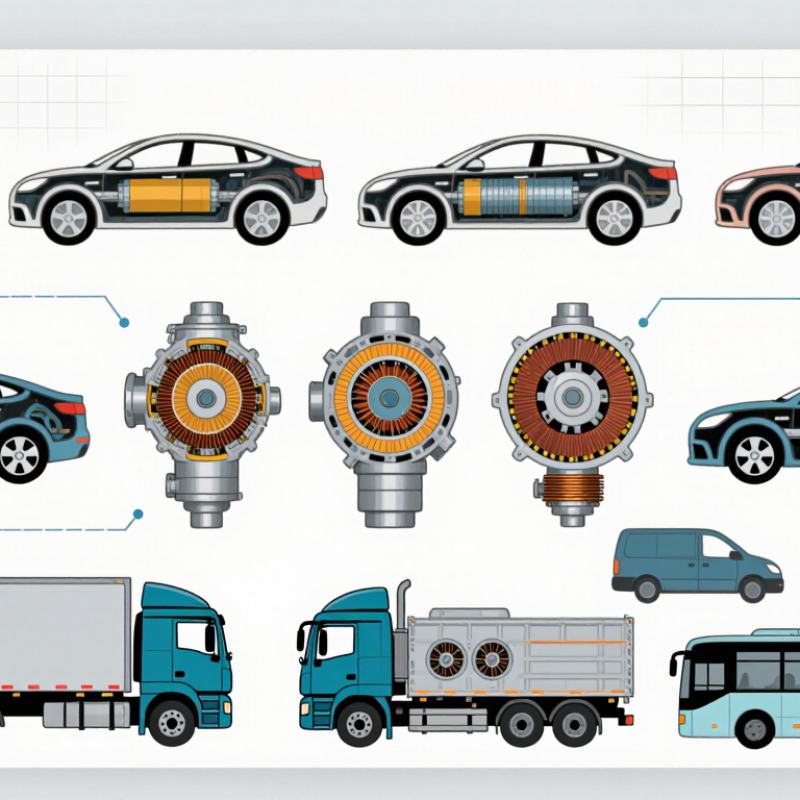
The IEA’s Global EV Outlook 2024 recorded more than 14 million electric car sales in 2023. That volume makes motor selection a global engineering question, not a niche debate. A practical taxonomy includes permanent-magnet synchronous motors, interior permanent-magnet motors, surface-mounted permanent-magnet motors, induction motors, wound-field synchronous motors, synchronous-reluctance motors, switched-reluctance motors, brushless DC motors, axial-flux motors, and in-wheel motors.
Each type reflects a different compromise. Permanent-magnet designs deliver strong torque in compact housings, but they depend on magnet materials and careful thermal control. Induction motors avoid permanent magnets, yet their rotor losses can reduce efficiency under demanding cycles. Switched-reluctance motors tolerate heat well, although acoustic noise remains a real concern. Axial-flux units can shorten the drivetrain, but manufacturing consistency is still developing. In-wheel motors simplify packaging, while increasing exposure to impacts and unsprung mass.
The U.S. Department of Energy’s Electric Drive Technology Roadmap emphasizes efficiency, power density, durability, and material security. These criteria matter differently across regions. A delivery vehicle may favor robust induction or wound-field technology. A lightweight passenger vehicle may prioritize permanent-magnet density. The IEA also reported that electric cars reached nearly 18% of global new-car sales in 2023, increasing pressure for scalable designs. The taxonomy is useful, but not perfect. Some categories overlap. Axial-flux motors, for example, describe geometry rather than one magnetic principle. That detail is easy to miss.
Top 10 EV Motor Types: A Taxonomy for 14M+ 2023 Sales (IEA)
| Rank | Motor type | Operating principle | Rotor and excitation | Typical peak efficiency | Main advantages | Main limitations | Typical EV applications | Market relevance |
|---|---|---|---|---|---|---|---|---|
| 1 | Interior Permanent-Magnet Synchronous Motor (IPMSM) | Permanent-magnet torque combines with reluctance torque, while the rotating magnetic field is synchronized with the rotor. | Magnets are embedded inside a laminated iron rotor; normally driven by a three-phase inverter. | Approximately 93–97% at peak operating points. | High power density, strong low-speed torque, wide constant-power range, and excellent regenerative-braking capability. | Uses permanent magnets and requires careful thermal management, rotor design, and inverter control. | Passenger cars, sport utility vehicles, crossovers, and many high-volume battery-electric platforms. | Very high |
| 2 | Surface Permanent-Magnet Synchronous Motor (SPMSM) | Permanent magnets on the rotor interact with the rotating stator field to produce synchronous torque. | Magnets are mounted on the rotor surface and retained with sleeves, bands, or structural adhesive. | Approximately 92–96% at peak operating points. | Simple electromagnetic design, low rotor losses, smooth torque, and high efficiency in suitable speed ranges. | More vulnerable to magnet mechanical stress at high speed and generally offers less field-weakening capability than IPMSM designs. | Compact passenger vehicles, light electric commercial vehicles, and applications prioritizing smooth operation. | High |
| 3 | Permanent-Magnet-Assisted Synchronous Reluctance Motor (PMa-SynRM) | Reluctance torque from rotor flux barriers is strengthened by a smaller quantity of permanent-magnet material. | Flux-barrier rotor with strategically placed magnets, usually inside the rotor laminations. | Approximately 92–96% at peak operating points. | Can reduce magnet usage while retaining high efficiency, good torque density, and a useful constant-power range. | Rotor manufacturing and electromagnetic optimization are complex; torque ripple and acoustic noise require careful control. | Passenger vehicles, delivery vans, and traction systems seeking a balance between efficiency and material usage. | High |
| 4 | Induction Motor (Asynchronous Motor) | The rotating stator field induces current in the rotor, creating electromagnetic torque without permanent magnets. | Cage rotor made from conductive bars and end rings; rotor excitation is produced by electromagnetic induction. | Approximately 90–95% at peak operating points. | No rare-earth magnets, robust construction, mature manufacturing, and good high-speed capability. | Rotor copper or aluminum losses reduce low-load efficiency; sophisticated inverter control is needed for optimum performance. | Performance-oriented passenger vehicles, heavy-duty traction, buses, and systems requiring magnet-free operation. | High |
| 5 | Synchronous Reluctance Motor (SynRM) | Torque is generated because the rotor aligns with the lowest magnetic-reluctance path of the rotating stator field. | Magnet-free rotor with engineered flux barriers and no rotor windings or permanent magnets. | Approximately 88–94% at peak operating points. | Avoids permanent magnets, has low rotor losses, and can offer strong high-speed durability. | Lower torque density than leading permanent-magnet designs and potentially higher torque ripple and acoustic noise. | Commercial vehicles, industrial-derived traction systems, and applications where magnet reduction is important. | Growing |
| 6 | Switched Reluctance Motor (SRM) | Sequentially energized stator phases pull salient rotor poles into alignment to create reluctance torque. | Simple laminated steel rotor with salient poles; no magnets, rotor windings, slip rings, or commutator. | Approximately 85–93% at peak operating points. | Very robust rotor, low material cost potential, high-temperature tolerance, and strong fault tolerance. | Torque ripple, acoustic noise, and demanding position-based control can complicate passenger-vehicle refinement. | Electric buses, commercial vehicles, off-road equipment, and cost-sensitive traction applications. | Growing |
| 7 | Wound-Field Synchronous Motor (WFSM) | A controllable rotor magnetic field synchronizes with the stator field to produce torque. | Rotor carries an electrically energized field winding supplied through slip rings or a brushless exciter. | Approximately 90–95% at peak operating points. | No permanent magnets, adjustable air-gap flux, and potentially strong efficiency across varying operating conditions. | Rotor excitation adds complexity, mass, losses, and control requirements compared with simpler rotor architectures. | Heavy-duty vehicles, buses, high-voltage traction systems, and applications requiring variable magnetic flux. | Specialized |
| 8 | Axial-Flux Permanent-Magnet Motor | Electromagnetic flux travels mainly parallel to the motor shaft rather than radially across a conventional cylindrical air gap. | Disc-shaped rotor and stator, typically using surface or embedded permanent magnets. | Approximately 93–97% at peak operating points, depending on cooling and design. | High torque density, short axial length, and flexible packaging for in-wheel, wheel-adjacent, or compact drive units. | More demanding manufacturing, cooling, structural tolerance, and magnet-retention requirements than common radial-flux motors. | Premium passenger vehicles, high-performance applications, motorcycles, and space-constrained platforms. | Emerging |
| 9 | Brushless DC Motor (BLDC) | Electronic commutation switches stator phases in response to rotor position, producing torque from permanent-magnet rotor flux. | Permanent-magnet rotor with a concentrated-winding stator; often uses trapezoidal back electromotive force. | Approximately 88–95% at peak operating points. | Compact construction, high starting torque, straightforward electronic control, and broad availability in smaller power ratings. | Torque ripple and acoustic noise may be higher than in sinusoidally controlled synchronous motors. | Electric two-wheelers, auxiliary systems, compact vehicles, pumps, fans, and low-to-medium power traction. | High in compact EVs |
| 10 | Transverse-Flux Permanent-Magnet Motor | The magnetic flux path is arranged largely transverse to the direction of rotor rotation, enabling high pole counts and torque density. | Permanent-magnet rotor with a specialized three-dimensional stator and flux path. | Approximately 88–94% at peak operating points. | Potentially high torque density and compact packaging at low speed. | Complex three-dimensional magnetic circuits, difficult manufacturing, higher cost, and limited large-scale automotive adoption. | Specialized in-wheel drives, robotics-derived mobility, compact traction, and research-oriented vehicle platforms. | Niche |
Major types include permanent-magnet synchronous, induction, wound-field synchronous, and synchronous-reluctance motors. Other types include switched-reluctance, brushless DC, axial-flux, and in-wheel motors. Some categories overlap.
Permanent-magnet motors provide strong torque in compact housings. They can maintain high efficiency across useful driving ranges. However, magnets add material and sourcing concerns. Thermal control matters.
Yes, induction motors use no permanent magnets. Their squirrel-cage rotors tolerate heat, shocks, and repeated speed changes. Rotor losses can reduce efficiency during acceleration or light-load driving. Cooling demand may also increase.
These motors create torque through shaped magnetic flux barriers. They can reduce magnet dependence and material exposure. Poor rotor design may increase noise, torque ripple, or mechanical stress. Request full efficiency maps.
It combines flux barriers with smaller permanent magnets. This design can improve torque density and power factor. It usually needs fewer magnetic materials than a full permanent-magnet design. Risk remains.
A delivery vehicle may favor induction or wound-field technology. These designs can handle frequent starts, heavy loads, and changing speeds. Thermal durability and repair access may matter more than peak efficiency. Peak figures mislead.
Their simple rotors and strong heat tolerance can support demanding operation. They may suit harsh thermal environments. Acoustic noise and torque ripple remain concerns. Cabin comfort could suffer.
Axial-flux motors can shorten the drivetrain and increase power density. Their manufacturing consistency is still developing. Quality control may vary between production sites. I would verify real production data.
In-wheel motors can simplify packaging and shorten mechanical connections. They add unsprung mass near the wheels. Road impacts may reach the motor more directly. Suspension behavior can become less comfortable.
Compare efficiency maps, not one peak-efficiency number. Check low-speed driving, partial loads, hill climbs, and repeated acceleration. Also review bearing life, salt-spray results, inverter compatibility, and spare-part access. Service training matters.
Choosing the right Electric Vehicle Motor requires balancing efficiency, power density, cost, reliability, and material availability. This guide presents a practical taxonomy of ten major motor types used or considered for modern electric vehicles, including brushed DC, brushless DC, surface and interior permanent-magnet motors, induction motors, synchronous reluctance designs, permanent-magnet-assisted reluctance motors, switched reluctance motors, wound-field motors, and axial-flux systems. It compares how these technologies can achieve different efficiency levels, with advanced designs commonly targeting approximately 85–95% under suitable operating conditions.
The comparison also explains rare-earth exposure, manufacturing complexity, thermal behavior, control requirements, and long-term durability. Permanent-magnet designs may deliver excellent compactness and power density, while induction, reluctance, and wound-field approaches can reduce dependence on rare-earth materials. Axial-flux motors offer promising packaging advantages but may involve specialized production challenges. A buyer-focused matrix helps global purchasers match motor architecture to vehicle size, driving conditions, cost targets, supply-chain priorities, and expected service life.

 Axon Motor