Choosing an Automotive DC Motor in 2026 requires more than comparing torque, price, and catalogue efficiency. Vehicle electrification is accelerating. The International Energy Agency reported more than 17 million electric cars sold worldwide in 2024, representing over 20% of new-car sales. Its Global EV Outlook 2025 expects further growth during 2025. More electrified vehicles mean greater demand for reliable motors in pumps, fans, actuators, steering systems, braking units, and thermal-management assemblies.
John M. Miller, an automotive electrification specialist and author of Propulsion Systems for Hybrid Vehicles, describes the electric machine as “the heart of the electric vehicle.” The wording is simple. The engineering is not. A suitable Automotive DC Motor must match voltage, continuous torque, peak torque, speed range, duty cycle, noise limits, thermal conditions, and available packaging space. Engineers should also examine brush life, commutation quality, electromagnetic compatibility, ingress protection, and production traceability. The U.S. Department of Energy’s Vehicle Technologies Office continues to emphasize efficiency, durability, power density, and reduced system losses across electric-drive technologies.
A practical selection begins with the real load profile, not a sales brochure. A motor may survive a ten-second peak but overheat during repeated door, pump, or fan cycles. I have seen early shortlists fail because engineers used stall torque instead of operating torque. That mistake is easy to make. It is also expensive. ISO 26262 processes, supplier validation, thermal testing, and end-of-line inspection should support the final decision. No motor is universally best. The correct choice depends on the vehicle function, environment, control strategy, and evidence behind every specification.
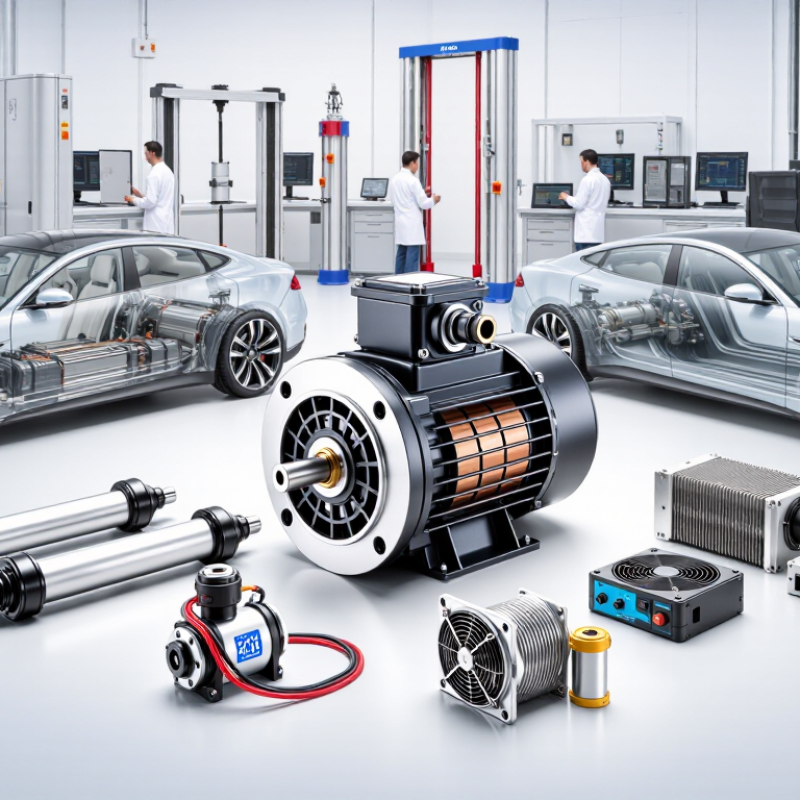
Before choosing an automotive DC motor in 2026, define its exact role. A blower motor needs quiet, continuous rotation. A pump motor may face frequent starts, fluid resistance, and short overloads. A window actuator needs high torque, low duty cycle, and controlled stopping. These are different jobs.
Operating conditions decide the specification. Record the vehicle voltage, normal current, stall current, duty cycle, ambient temperature, vibration, dust, moisture, and available installation space. A motor rated at 12 volts may experience voltage drops during cold starts. It may also see higher voltage during charging. The enclosure and connector must match the expected water and dust exposure. The International Energy Agency’s Global EV Outlook 2025 reports more than 17 million electric cars were sold worldwide in 2024, exceeding 20% of new-car sales. This expanding electrical content increases demand for compact, efficient auxiliary motors, even when the main drive motor uses another technology.
Tips: Test the motor in the real assembly, not only on a bench. Measure temperature near the winding and connector. Check noise after vibration testing. Do not select by peak torque alone. A motor that survives one stall may fail after repeated stalls. That is a useful warning. Engineers sometimes underestimate humidity and cable resistance. I have seen a seemingly adequate design lose performance because its return path was too small. Review ISO 16750 environmental loads and compare measured results with the duty cycle. Leave reasonable thermal margin, but avoid oversized motors that add cost, mass, and unnecessary battery load.
Choosing an automotive DC motor in 2026 starts with the duty cycle, not the catalogue headline. Brushed DC motors remain simple and inexpensive, but brush wear limits service life. Brushless DC motors offer better durability and speed control. Permanent-magnet synchronous motors usually deliver strong torque density, while switched-reluctance designs tolerate high temperatures but can create more noise.
Power ratings need careful reading.
Peak power supports acceleration for seconds; continuous power reflects sustained operation. A 20 kW motor may overheat quickly if its cooling system cannot remove heat. Torque matters at the wheel. Check the torque curve, reduction ratio, and launch conditions, rather than quoting one maximum value. Speed also changes the decision. A motor producing 180 Nm at low speed may need field weakening above 8,000 rpm. Real roads are less tidy.
Efficiency should be measured across the operating map. Peak efficiency can hide losses during repeated stops, climbing, or partial-load cruising. The International Energy Agency’s Global EV Outlook 2024 recorded almost 14 million electric-car sales in 2023, representing about 18% of new-car sales. That growth increases pressure on compact, efficient drive systems. U.S. Department of Energy testing guidance evaluates electric drives across speed, torque, and temperature conditions, not one laboratory point. I would request those maps before selecting a motor. A smaller motor can work well. Sometimes, it cannot. Gear ratio, inverter quality, cooling, and battery voltage may matter more than a larger nameplate.
Material selection affects heat, efficiency, noise, and service life. Copper windings handle high current, but they add mass and cost. Ferrite magnets suit cost-sensitive systems. Rare-earth magnets provide stronger torque in compact housings. Laminated electrical steel can reduce magnetic losses at higher speeds. Brushed motors remain practical, although brush wear deserves attention. In field testing, dirt near the commutator often causes more trouble than expected.
Match the motor with its controller, not in isolation. PWM control can regulate speed, while current limiting protects the winding during stalled operation. Feedback from Hall sensors or encoders improves positioning and repeatability. Check switching frequency, electromagnetic compatibility, and thermal derating. The IEA Global EV Outlook 2025 reports that electric car sales exceeded 17 million in 2024, representing more than 20% of global car sales. This growth increases demand for compact motors in pumps, fans, actuators, and thermal systems.
Mounting details decide whether a specification works in a vehicle. Confirm shaft diameter, spline form, bolt pattern, rotation direction, and available envelope. Match the motor to the vehicle’s 12-, 24-, or 48-volt architecture. Check peak current, duty cycle, vibration, water exposure, and operating temperature. OICA reported global motor-vehicle production above 75 million units in 2023, showing the scale of compatibility challenges. A missed connector seal can defeat an excellent motor. Recheck the load profile. Static bench tests can hide repeated-start failures.
Reliability begins with the real duty cycle, not the catalog’s peak speed. Record load, voltage variation, start-stop frequency, and stall duration. A motor should survive repeated thermal cycles without damaging its windings or bearings. Request endurance data, failure rates, and traceable production records. Test samples under vibration, dust, moisture, and cold starts. Laboratory success is not enough. In practical evaluations, connector corrosion often appears before motor failure.
Safety requires more than insulation. Check current limiting, thermal protection, locked-rotor behavior, and controlled shutdown. For safety-related vehicle functions, review the applicable ISO 26262 process evidence and electrical test records. EMC testing should address conducted and radiated emissions, including vehicle-level compatibility under CISPR 25 methods. Ask how faults are detected. A warning signal without a safe response is weak protection. Documentation matters.
Maintenance depends on construction. Brushed motors may need brush and commutator inspections, while brushless designs require dependable electronics and sensor diagnostics. Examine bearing seals, service access, replacement intervals, and diagnostic codes. Environmental limits must match the installation zone. Consider temperature, salt spray, water exposure, vibration, altitude, and chemical contact. My first checklist once focused too heavily on efficiency. It missed service access. That mistake changed the evaluation process. A motor that saves energy but cannot be inspected easily may create higher long-term risk.
How to Choose an Automotive DC Motor in 2026?
Choosing an automotive DC motor starts with the vehicle’s real operating conditions. Define voltage, continuous torque, peak torque, speed range, duty cycle, and ambient temperature. Do not rely only on catalog ratings. A motor may deliver impressive stall torque, yet overheat during repeated traffic cycles. Request test data for thermal rise, vibration, noise, electromagnetic compatibility, and service life. Confirm whether the supplier tests complete motor assemblies or only selected samples. Traceable records matter when specifications change.
Tips: Compare at least three qualified suppliers. Review their engineering response, production controls, inspection methods, and failure-handling process. Ask for drawings, tolerance limits, sample reports, and change-notification procedures. A low unit price can hide expensive tooling, integration delays, or weak after-sales support. Visit the production site when practical. Pictures are not proof.
Estimate total ownership cost across the vehicle program, not just the purchase order. Include energy use, wiring changes, controllers, installation labor, maintenance, warranty exposure, spare motors, and possible production downtime. Calculate cost per operating hour under realistic loads. A spreadsheet can still lie if duty cycles are too optimistic. I have seen teams overvalue a small price reduction and overlook thermal redesign. That judgment deserves review. Also check forecast capacity, delivery stability, and end-of-life support. The best supplier is not always the cheapest one. Reliability is often purchased before the first motor ships.
Anonymous screening dataset for automotive DC motor selection. Values are representative engineering benchmarks for 12 V/24 V/48 V low-voltage applications and should be confirmed through supplier drawings, test reports, samples, and production validation.
| Candidate | Typical Automotive Use | Nominal Voltage | Continuous Mechanical Power | Rated Speed | Rated Torque | Peak Torque | Typical Efficiency | Ingress Protection | Operating Temperature | Duty / Life Target | Estimated Unit Price | Annual Energy Cost | 5-Year Maintenance Cost | Estimated 5-Year TCO | Supplier Verification Priority |
|---|---|---|---|---|---|---|---|---|---|---|---|---|---|---|---|
| Candidate A | Seat adjustment, small actuator, flap control | 12 V DC | 0.25 kW | 2,500 rpm | 0.96 N·m | 2.4 N·m | 78% | IP54 | −40 to +85 °C | Intermittent; 10,000 cycles | $42 | $61 | $35 | $412 | Verify cycle durability |
| Candidate B | Cooling fan, blower, auxiliary pump | 12 V DC | 0.55 kW | 3,000 rpm | 1.75 N·m | 4.4 N·m | 82% | IP55 | −40 to +105 °C | S2 intermittent; 2,000 h | $68 | $113 | $55 | $688 | Check thermal test data |
| Candidate C | Electric water pump, oil pump, HVAC compressor assist | 24 V DC | 0.75 kW | 3,000 rpm | 2.39 N·m | 6.0 N·m | 84% | IP67 | −40 to +125 °C | S1 continuous; 5,000 h | $126 | $150 | $92 | $968 | Require ingress validation |
| Candidate D | Power liftgate, door module, seat drive | 24 V DC | 1.10 kW | 2,500 rpm | 4.20 N·m | 10.5 N·m | 86% | IP67 | −40 to +105 °C | Intermittent; 20,000 cycles | $174 | $222 | $118 | $1,514 | Validate peak-load profile |
| Candidate E | Electric power steering auxiliary drive, compressor drive | 48 V DC | 1.50 kW | 3,500 rpm | 4.09 N·m | 10.2 N·m | 88% | IP67 | −40 to +125 °C | S1 continuous; 8,000 h | $248 | $286 | $165 | $1,843 | Verify EMC and insulation |
| Candidate F | Electric coolant pump, fan, thermal management module | 48 V DC | 2.20 kW | 4,000 rpm | 5.25 N·m | 13.1 N·m | 91% | IP68 | −40 to +140 °C | S1 continuous; 10,000 h | $365 | $406 | $210 | $2,605 | Confirm cooling-system compatibility |
| Candidate G | 12 V auxiliary actuator with integrated gearbox | 12 V DC | 0.35 kW | 1,800 rpm | 1.86 N·m | 5.6 N·m | 76% | IP56 | −40 to +85 °C | Intermittent; 15,000 cycles | $59 | $95 | $46 | $580 | Check gearbox backlash |
| Candidate H | High-duty 24 V pump or fan module | 24 V DC | 1.80 kW | 3,600 rpm | 4.77 N·m | 11.9 N·m | 89% | IP67 | −40 to +125 °C | S1 continuous; 6,000 h | $292 | $340 | $175 | $2,167 | Review bearing and brush life |
Define its exact role, voltage, torque, speed, duty cycle, temperature, and installation space. Different jobs need different motors.
Record current, stall current, vibration, dust, moisture, and voltage changes. Cold starts can reduce voltage. Charging can increase it.
No. Test it inside the real assembly. Measure winding temperature, connector heat, noise, and performance after vibration.
Peak torque may hide overheating during repeated stalls. One successful stall proves little. Repeated traffic cycles matter more.
Request endurance results, failure data, production records, and environmental test reports. Check whether complete assemblies were tested.
Consider current limiting, thermal protection, locked-rotor behavior, fault detection, and controlled shutdown. A warning without a safe response is weak.
Brushed motors may need brush and commutator inspections. Brushless motors need reliable electronics and sensor diagnostics.
Check temperature, salt spray, water, dust, vibration, altitude, and chemical contact. Connector corrosion can appear early.
Compare several qualified suppliers, drawings, tolerances, inspection methods, delivery stability, and support. Include wiring, controllers, labor, maintenance, downtime, and warranty exposure.
Yes. A low price may hide tooling, redesign, service, or downtime costs. I once valued efficiency too heavily and missed service access. That judgment needed review.
Choosing the right Automotive DC Motor in 2026 requires a clear understanding of its role, operating environment, and expected workload. Begin by defining the motor’s function, duty cycle, voltage, load, temperature range, vibration exposure, and available installation space. Then compare suitable motor types according to power rating, starting and continuous torque, operating speed, response time, and efficiency. The selected design should also match the vehicle’s electrical architecture and control strategy, including speed regulation, protection features, and mounting requirements.
Material quality, thermal performance, sealing, and resistance to dust, moisture, and vibration are essential for dependable operation. Buyers should evaluate safety requirements, maintenance needs, service life, and performance under extreme environmental conditions. Supplier selection should be based on verified technical specifications, testing documentation, production consistency, technical support, and delivery capability. Finally, estimate total ownership cost by considering purchase price, installation, energy consumption, maintenance, replacement intervals, and potential downtime. A balanced assessment helps ensure reliable performance, safe integration, and long-term value.